
A person charged this morning, served, or let go that afternoon is on their phone comparing faces. Most lawyers approach the photograph in that comparison the way they would a passport photo. Book a session, wear the good suit, smile when asked. Two published studies say the smile may work against you, and that people decide faster than they can read a name.
A face is judged in a tenth of a second
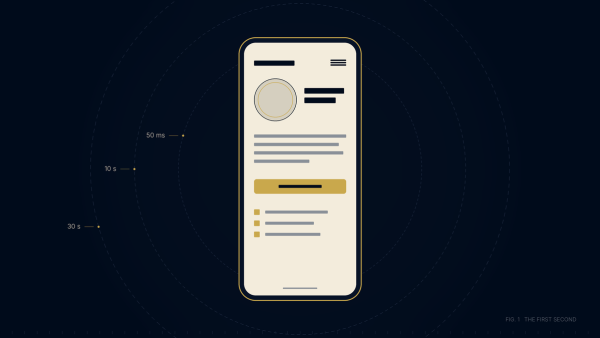
In 2006, Janine Willis and Alexander Todorov at Princeton published a study in Psychological Science. They showed participants 66 unfamiliar faces for a tenth of a second, half a second or a full second, and asked for ratings of trustworthiness, competence, likeability, attractiveness and aggressiveness. A separate group rated the same faces with no time limit.
The tenth of a second ratings lined up with the unlimited ones. For trustworthiness the correlation was .73. For competence it was .52. In plain terms, the snap judgment a person makes about whether you can be trusted lands close to the judgment they would make after studying your face all afternoon. Half a second or a full second did not significantly change the result. The main experiments used 117 participants.
By the time a prospective client scrolls down to your year of call, they have already formed a view of you from the photograph, and the research says more time would not have changed it much.
A broad smile reads as less capable when the stakes are high
Ze Wang, Huifang Mao, Yexin Jessica Li and Fan Liu published a series of experiments in the Journal of Consumer Research in 2017 on what smile intensity does to perception. Across the studies, a broad smile made the person in the photograph look warmer and less competent than a slight smile did. One of the experiments used an advertisement for a lawyer’s services.
The experiment that matters for a law firm changed how risky the purchase felt. The researchers framed the service as high risk, and participants rated the person with the broad smile 4.40 for competence against 5.08 for the person with the slight smile, on a seven point scale. Intention to buy fell from 4.37 to 3.35. Warmth stayed the same.
The high-risk experiment used a nutrition coaching service. The lawyer advertisement appeared in a different experiment that tested something else. The research establishes a mechanism: a broad smile reads as less capable when the stakes feel high. Applying that to a person choosing a lawyer in the worst week of their year is a reasonable inference and not a measured result.
Direction by practice area
The research gives a direction. The direction changes depending on who is looking and what they fear.
Criminal defence
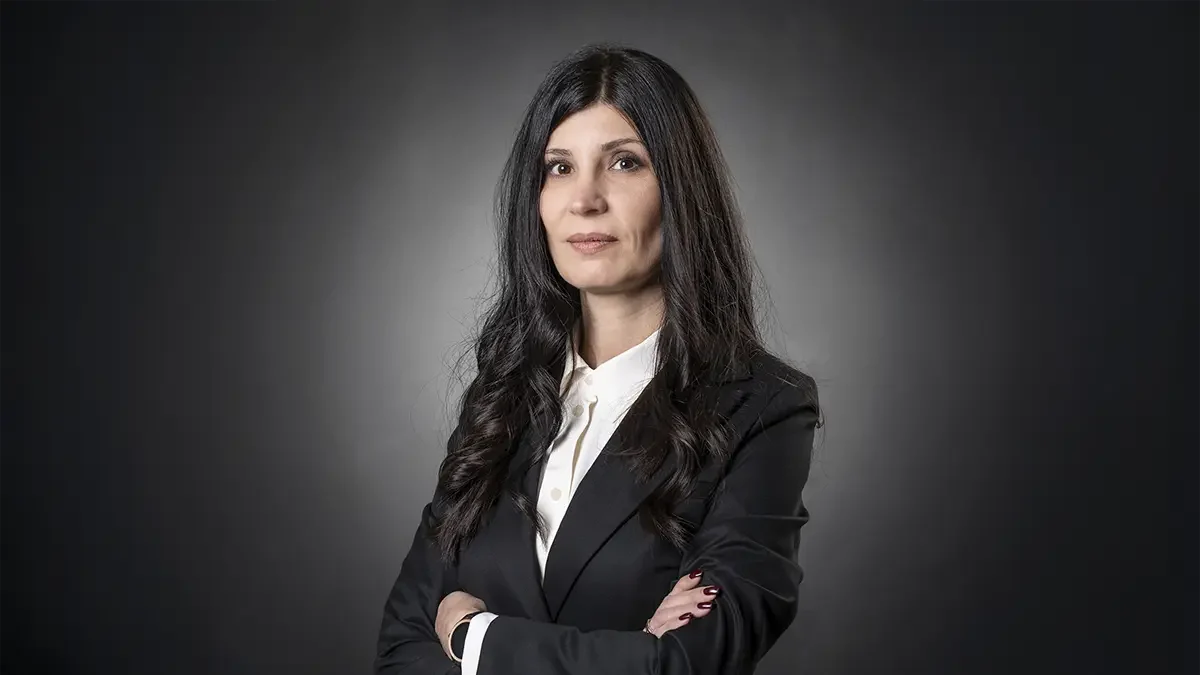
The client is frightened and wants to know you can handle it. Direct eye contact, upright posture, a settled face. Let the light and the room carry the warmth. A broad grin costs more here than in any other practice.
Family law
The client is grieving something and wants to be understood and also wants to win. A slight smile, with warmth carried by softer light, an open posture, and a setting where someone can sit and talk. The expression should say that you have heard this before and know what to do.
Employment law
The client has been dismissed or is about to be, and is angry as well as scared. They want someone who will be taken seriously across a boardroom table. Business setting, direct gaze, slight smile, a little more approachable than criminal defence.
Personal injury
The client is in pain and has been told to get a lawyer. They are choosing between many faces on many ads. A slight smile, direct eye contact and a working office behind you, because the studio backdrop is what most competitors use.
Four photographs that work against you
- The laughing group shot outside the building. It looks like a good place to work and nothing like a place that handles a charge.
- The phone headshot against the boardroom wall, lit from a window on one side. It reads as careless before it reads as anything else.
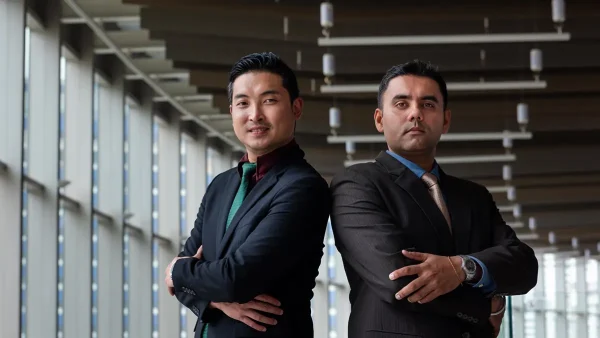
- The relaxed pose. Crossed arms, a doorframe, a coffee. A person in crisis is not looking for relaxed.
- The forced smile the photographer asked for. It reaches the mouth and stops, and the viewer has a tenth of a second to notice.
A headshot session and a directed shoot
A headshot session starts with a backdrop and ends with a file. A directed shoot starts with a brief that says who the client is, what they are afraid of, what they should feel when this face appears on their phone, and where the image will run. The photographer, the stylist and the creative director work from that brief, and the expression, the setting and the light get decided before anyone picks up a camera. Veritas does this work with law firms and describes it on the Services page under brand experience.
Two questions for the photographer
Ask who the client is and what they should feel when they see the picture. A photographer who asks you those questions first is directing. One who starts with the backdrop is taking a headshot, and the research above says someone who has not heard your name will decide what it means in a tenth of a second.